

Lori and I were trying to remember when we last went anywhere for more than a day. I think it was last September. So, we decided to celebrate our wedding anniversary by spending time in Taos, New Mexico.
Taos is rich in history. It was founded in 1795. At the time, it was a fortified plaza and trading outpost for the neighboring Native American Taos Pueblo and Hispanic communities. Taos was also a branch of the Santa Fe trail.
Taos witnessed the Pueblo Rebellion in 1680 against Spain and the Indian uprising in 1847 that killed Charles Bent, the U.S. civil governor of New Mexico.
Taos has flown under five flags. The Spanish Colonial Flag, the Mexican Flag, the Republic of Texas Flag, the United States Flag and the Pueblo Flag, a UNESCO World Heritage Site with its own distinct flag.
While there, we went to the Kit Carson Memorial Cemetery, which is part of the Kit Carson Park. The cemetery has a rich history, dating back to 1847, and it’s where many prominent Taos people found their final rest.
Ten miles northwest of Taos is the Rio Grande Gorge Bridge. It is roughly 600 feet above the Rio Grande River. The bridge was started in 1963 and completed in 1965. It is part of U.S. Route 64. The span is 1,280 feet.
We enjoyed shopping in the historic Taos Plaza. Its origins trace back to 1796 when the King of Spain granted a land grant to 63 families in the area. This grant became a crucial settlement outside the ancient Taos Pueblo.
The plaza was initially a fortified square with homes built in large quadrangles, forming a fortress- like structure. Sentries guarded the corners day and night and a massive gate served as the sole entrance and exit. Livestock sought refuge within the enclosure at night, while merchants displayed their wares during trade fairs much like they do today. Over time, fires claimed some buildings, but new structures have replaced them.
Although Taos is nearly 7,000 feet in elevation, the weather was beautiful.
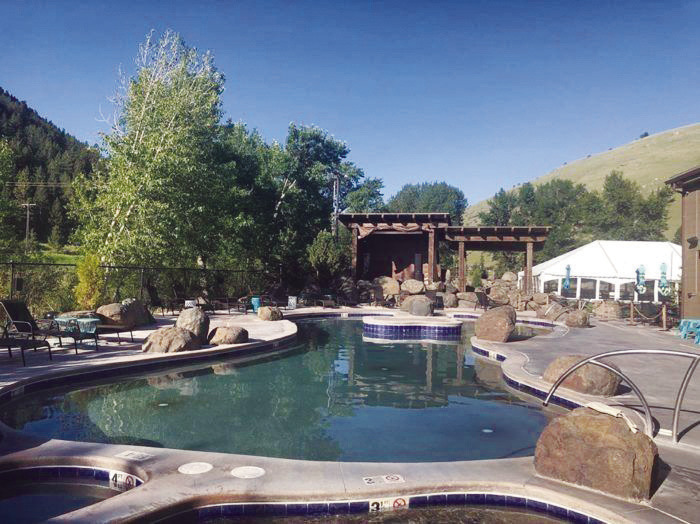
We detoured one day to Ojo Caliente Hot Springs, a group of thermal springs located in the south part of the county about 45 minutes from Taos. We enjoyed the seven mineral springs, as well as a mud bath and soaking up the sun.
The hot springs were used by prehistoric people including early Spanish colonizers and Coronado’s soldiers. The original place name is Posi, which translates to ‘village at the place of the green bubbling hot springs’.
The Puebloan village housed more than 1,000 people and contained numerous structures. It is thought to have been abandoned in the 16th century due to an epidemic. Other Native peoples used the springs as well, including distant tribes such as the Navajo, Commanche and the Ute.
If you like Mexican food you will like Taos, an abundance of Mexican restaurants dot the landscape. Hotels are also plentiful and rates are reasonable.
We stopped on the way home and bought a chiminea. These handcrafted outdoor clay heaters are wonderful in the chilly evenings of Colorado, and are inexpensive in an area where they are so abundant.
You can make the trip from Colorado City in about 2.5 hours. It was a beautiful time to celebrate 34 years together.