
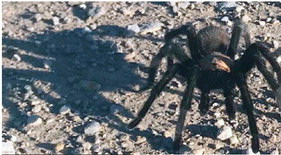
They are large and hairy, dark and scary, and they are on the move. It is time for the annual tarantula “migration” in Southern Colorado where thousands of male tarantulas crawl for miles for their mating season.
The annual tarantula migration takes place every fall. As the temperatures cool in late summer, the tarantulas start to move. The migration usually starts in southeastern Colorado and it is close to the end of August and into September when the hairy brown spiders, some as big as saucers, come out of hiding looking for mating partners. It peaks around October. Tarantula movement or migration occurs when males reach adulthood at about eight and leave their burrows in search of females. The large brown arachnids are most active in the last hour before sunset. After a short mating season, a male tarantula typically dies before the arrival of winter. Females are luckier, having a lifespan of 20-25 years.
Even though it’s called a migration, it isn’t one. When mating season arrives, otherwise reclusive males reaching adulthood emerge from their burrows to go looking for females.
Species in Colorado are reported to range from black to dark brown with belly hairs slightly lighter than the rest of their bodies. Most have banding on their legs.
Though they are large and creepy-looking, tarantulas are not normally aggressive and will only bite if provoked. Their bite is venomous and can result in an allergic reaction. They also have hairs on their belly which cause irritating and itching. The hairs work their way into the skin, which can result in an allergic reaction.
This so-called migration has become one of Colorado’s weirdest tourist attractions. A steady stream of visitors makes the drive to La Junta to watch the eight-legged arachnids cruising for hookups. Thousands of tarantulas can be seen scurrying on the roads between Pueblo or Walsenburg and the La Junta area. The peak tarantula viewing time in La Junta is mid-September.
The Comanche National Grassland near La Junta is the number one destination to spot tarantulas during their migration in Colorado. The park in the southeastern part of the state occupies about 443,764 acres.