
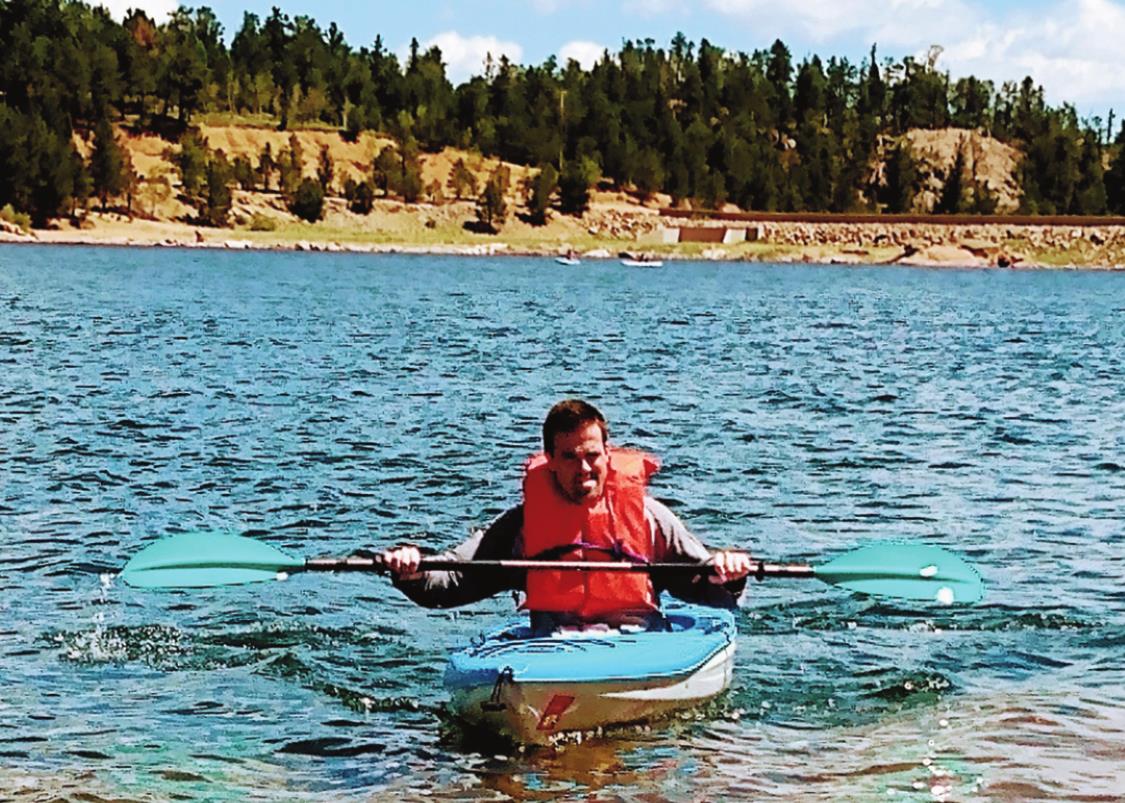
This great adventure began outside our garage when we decided to go kayaking. So how is that the beginning of a great adventure you ask? Well, until recently we had a pickup, making it easy to move a kayak. This was our first effort to get the kayak attached to the car without scratching it, and travel safely to our destination.
The car had no rails on the roof, so we decided to put the kayak in through the back. By placing it between the front passenger seats and doing some creative tying on a car with very little metal and lots of plastic, we hit the road for a test run.
There were several obvious drawbacks. To begin with we couldn’t see each other. And, although the planned trip wasn’t a long one, it is nice to be able to talk while you are driving.
Probably the biggest issue was the fact that, as the driver, if I needed to make a lefthand turn, I needed Lori to give me the go ahead from her side of the kayak.
We decided maybe not.
Then we began the process of putting the kayak on the roof. We had some solid rubber pieces to rest the kayak on. We had rachet straps and we located some metal under the hood. We again went for a test run and found that when over 30 mph the straps began to sing, making almost a Zen-like sound. But we could see each other, we could make a safe left turn and we could get the car in the garage with the kayak on.
In the morning we headed to the North Catamount Reservoir, about eight miles up Pike’s Peak. The largest of three reservoirs on Pike’s Peak, North Catamont has 210 acres of surface and 6.5 miles of shoreline. It is the least visited of the three and is partially via dirt road. Once you get there, space is abundant and people are few.
At the Pike’s Peak toll road there is a reduced rate ($5/person) to go to the lakes rather than the peak.
We fished, in addition to kayaking, so you need to know that only flies and lures are allowed. The lake has Rainbow Trout and some large Mackinaw. Throughout the summer, 25,000 catchable fish are stocked in the lake.
Until Labor Day, the hours are 7:30 a.m. to 7:00 p.m.
You can stop at South Catamount Reservoir. It is the smallest of the three bodies of water at only 120 surface acres and more crowded.
The lakes were developed in order to supply Colorado Springs and surrounding towns with water. After decades of improvement in the area’s water treatment capabilities, the South Catamount Reservoir became officially open for public recreation in the summer of 1992. All three lakes are part of a 2,267-acre Pikes Peak North Slope Recreation area.
We didn’t have much luck fishing, but until a midafternoon rain shower threatened we were blessed with beautiful weather, a relatively calm lake and lots of room to kayak. There are no motor boats on North Catamount, so kayaks and paddle boards are it.
Perhaps the most notable event of the day was the appearance of a huge Pelican within 100 yards of us.
As the clouds rolled in, we made one last stab at catching a trout, one last turn paddling around the 200 plus acres, and one last time for absorbing the very sparsely packed lake’s ambiance and tranquility.
Being veterans now, the kayak went onto the car easily, and we began the descent down Pike’s Peak to the melodious hum of rachet straps vibrating in the breeze. A nice way to spend a Saturday, don’t you think?