
The Squirrel Creek Tail parallels Squirrel Creek for 4.8 difficult miles from the trailhead at the end of Forest Road 382, at Davenport Campground (8,500 feet) east of State Road 165 to Pueblo Mountain Park (6,500 feet) just west of Beulah. The trail does leave the creek for about one mile, at Squirrel Creek Gorge from the ruins of Squirrel Creek Lodge down Squirrel Creek Hill, a gentler slope than what the creek follows.
Originally this trail was Squirrel Creek Road (5CR332/5PE3109) which was built between 1920 and 1922 by the United States Forest Service with funding from the San Isabel Public Recreation Association (SIPRA). The road provided access to the Cascade Trail, (also built in 1920, possibly the first trail in a National Forest designed primarily for recreational hiking); the Squirrel Creek Campground and the Squirrel Creek Lodge.
The road was designed by Arthur Hawthorn Carhart and generally follows an eastwest direction through the narrow and steep-sided Squirrel Creek Canyon. The road for the most part did not exceed a seven percent grade. Originally the road was fourteen feet wide. The 1947 flood washed out Squirrel Creek Road and destroyed sixteen automobile bridges. Since then, the only access is by foot or horseback.
Squirrel Creek Trail conditions vary, following some parts of the original road. The trail section below the Davenport Campground follows the historic road with many areas still intact. The narrower portions of the upper section have been eroded over time, the original gravel and decomposed granite road base virtually non-existent.
The segment through the Squirrel Creek Campground to Pueblo Mountain Park was the most badly damaged in the flood. It is difficult to see the original road through most of the campground.
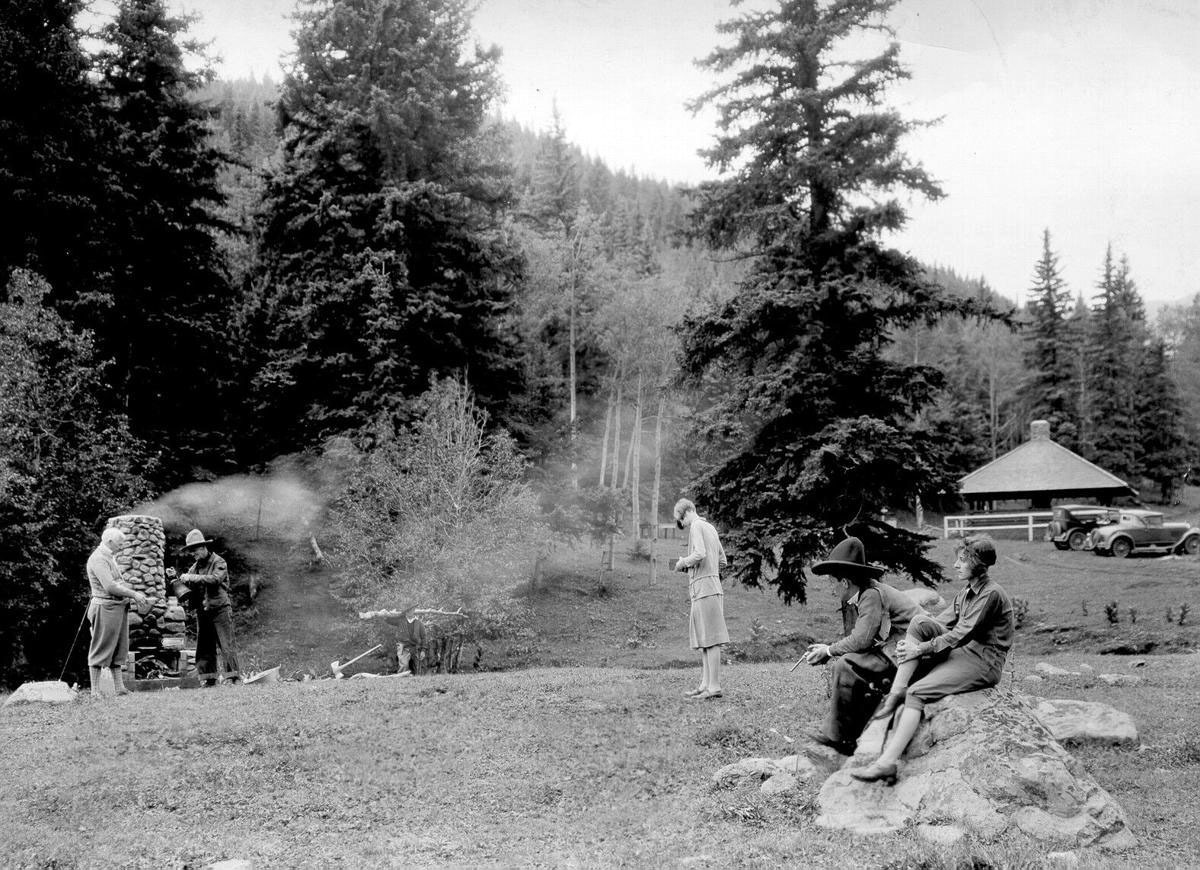
Squirrel Creek Campground and Lodge During the summer of 1919, improvements were built at the eastern edge of Squirrel Creek Canyon.
Fixed fireplaces, ‘sanitaries’ (chemical latrines), footbridges and shelters were added to the area decimated by overuse.
In 1920, Frank K. Culley, the head of the Landscape Design at Iowa State College, was hired to design and supervise construction of campgrounds on Squirrel Creek, North Creek and South Hardscrabble Creek— possibly the first campgrounds designed and built by a landscape architect in a National Forest.
The Pueblo Community House or Squirrel Creek Lodge was built with San Isabel Public Recreation Association (SIPRA) funds from 1923 to 1924. The twostory structure with a center hall, two large fireplaces, a roomy kitchen and a dance floor provided rooms to rent and meals in a dining hall. It was not repaired after the 1947 flood. Without the road access, supplies and employees could not reach the area.
The Forest Service burned the remaining structures in 1979. All that is left to see is the foundation, iron railings and old steps leading down to the western end of the Cascade Trail. The Cascade Trail was a three-quartermile walking path connecting the lodge to the campground. The flood also washed away part of the campground and the middle section of the Cascade Trail.
The Squirrel Creek Campground was added to the National Register of Historic Places in 2005. In 2008, partnerships were formed to rebuild, stabilize and interpret the campsites, Pueblo Community Lodge and picnic shelter. The Davenport Campground was also rebuilt to reflect its original 1920’s look.
Sources: “Squirrel Creek” National Park Service 2004; “Carhart and Squirrel Creek” by P.O. Abbott LORE April 2011; “Squirrel Creek” by George Williams LORE November 2015
