
GREENHORN VALLEY
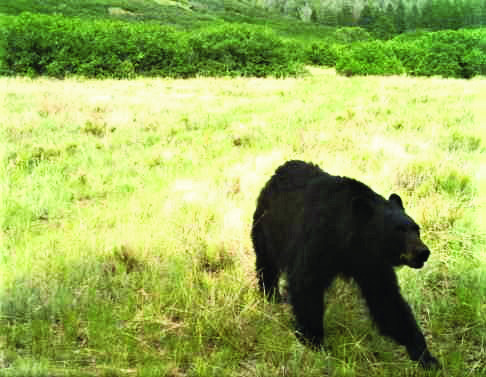
Getting along with your neighbors is an important part of peaceful living, even if you have to put up with some inconveniences in order to live together in the neighborhood. It is even more important if your new neighbor is a 200-lb bear that is constantly hungry and doesn’t tolerate criticism of her children’s antics.
Bears in Colorado are most active in the fall while preparing for hibernation. In the times right before hibernation, a black bear in Colorado is looking for approximately 20,000 calories a day. That is a lot of calories to find in a day, so they will take the route of least resistance to find any kind of food. If that food happens to be accessible in your garbage dumpster or bird feeder, you may not be pleased with your fourlegged neighbor.
The Colorado Rocky Mountains make a perfect home for black bears. They are omnivores, consuming all types of food including meat, but primarily berries and nuts. Their preferred habitats are oak brush and forests.
Open plains are less likely to attract black bears due to the scarcity of foodstuff.
Many mountain towns see a lot of bear activity in the fall as bears are often attracted to human habitation because of the availability of garbage. Studies show bears in Colorado are becoming too comfortable around humans and their food.
Bears often return to a garbage source, especially if they have found food there before. By eating human food, bears can lose their preference for natural food sources and their fear of humans. Over time, these bears may begin approaching people in search of food and can become aggressive, and dangerous. Bears looking for human food and garbage can damage property and injure people then these bears pose a risk to public safety and are often euthanized as a result.
As bears become comfortable around humans, they are more likely to be in areas where humans are. If their human-based food source stops or becomes not enough, the bear that raided the garbage can for a month may smell food in a house and try to break in when their calorie demand picks up.
Bears have an insatiable appetite and an amazing sense of smell, and they consider anything with a scent to be 'food.' This can include canned goods, bottles, drinks, toiletries, trash, and items used for preparing or eating meals.
It is possible to live in harmony with your bear neighbors but it does take being consistent with your habits and always being “bear aware.” A few practices to keep in mind are: 1. Never, ever leave garbage out. If possible, freeze garbage food items until trash day and then only put out the trash the morn- ing of scheduled pickup. Use a bear-proof garbage can, or install a sturdy, locked enclosure. Wash out garbage cans and recycling bins and store them inside.
2. Don't Hang a Bird-Feeder. Feed pets inside or immediately clean pet dishes and put away after your animals eat. Store pet food in a secure enclosure.
3. Clean up your barbecue grill 4. Don't Compost Meat or Smelly Foods 5. Be “bear aware” if eating outside in bear country, they love a good picnic too, and might be cranky if you say you didn’t fix enough food for their family to join in. If you decide to barbecue on the deck, make lots of noise, and don't leave your meat unattended. Clean up any spills and clean your dishes immediately.
6. Pick fruit and produce as soon as, or just before, it ripens. Add an electric wire around your garden or orchard fence to deter bears from your fruits and vegetables.
7. Put beehives, chickens, and small livestock in a secure pen at night or electric fence their enclosure.
8. Don’t leave anything inside your vehicle that could attract a bear. That includes sun tan lotion, hand crème, and air fresheners, along with empty food wrappers and packaging. Keep garage doors closed. Lock the door between the house and the garage.
9. Keep bear-accessible windows and doors closed and locked at night.
10. Do not feed the bears. No matter how cute, playful, or fluffy, no matter how tough a season it is, no matter if they look hungry. DO NOT FEED THE BEARS. They are wild animals meant to be left wild.