
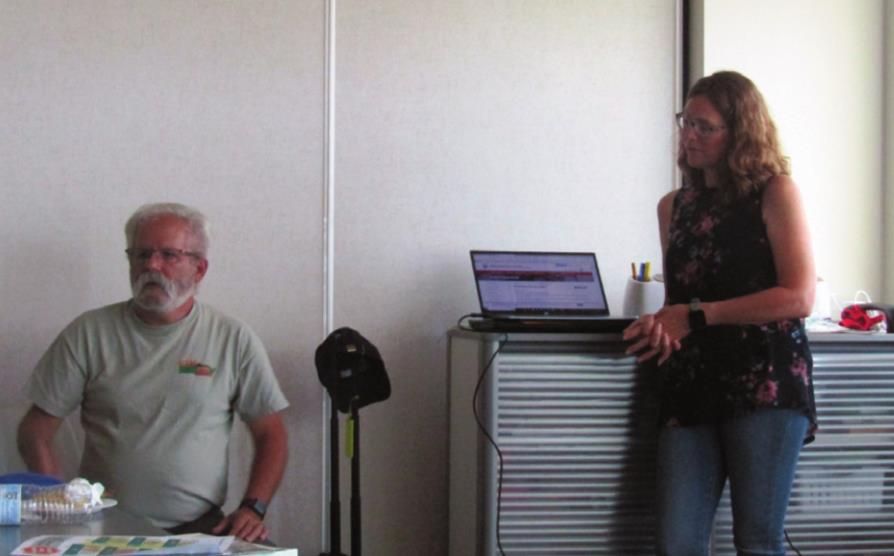
You could tell that fire safety weighs heavily on the minds of the Greenhorn Valley residents as they packed the fire awareness meeting, held July 23 at the Greenhorn Valley Library.
Paul Minow’s presentation, “Potential Wildfire Behavior in Your Area and Ways to Mitigate”, was well attended by those seeking answers on how to protect their homes from fire.
Minow worked 39 fire seasons as a wildland firefighter with the US Forest Service and Bureau of Land Management in various capacities, from entry-level crew person to Division/Group Supervisor with Rocky Mountain Incident Management teams. He retired from the BLM in 2018. Spanish Peaks Alliance for Wildfire Protection then contracted him to write an analysis of potential fire behavior within their area.
Minow explained that fires differ depending on the types of fuel in the area. For example, he referred to the Hatchet Ranch area’s short grass which could create a “surface fire”, with shorter flame lengths but the potential to move fast to seek more fuel.
He explained that the Rye/San Isabel area may deal with more “passive crown” fires, with flames that may go back and forth between the surface and the crowns of the trees. And the more heavily timbered areas may be subject to “active crown” fire with longer flames and more intensity as fuel is more plentiful.
Minow explained the importance of establishing safety zones around your home to protect it and help firefighters. He recommends that Zone 1, from zero to five feet around the house, be hardscape materials such as concrete or rock. Zone 2, consisting of five to thirty feet around the property, was recommended to be vegetation groups or islands to break up continuous fuel. Storage of firewood and other combustibles should not be in this area. In Zone 3, from thirty feet to 200 feet or to the property line, Minow recommends creating a ten-foot space between shrubs and trees.
John Robinson, created a community that follows Firewise USA standards and mitigated his cabin property, so overgrown with foliage in 2013 that it could not be seen, to a Firewise safe area. He explained how to contact the Firewise USA organization program.
Robinson stressed seven minimum things that need to be done each year to protect your property:
1. Clear away pine needles or leaves
2. Clean and screen any openings around the home such as roof or furnace vents
3. Trim shrubs and brush, and rake away all dead leaves and debris
4. Establish a 5-foot rock, gravel, or cement area around the home that is plant and debris free
5. Do not use railroad ties as landscaping material near a home
6. Pay attention and remove little things such as doormats that can be great tinder to start a fire
7. Remove firewood from the immediate area and make sure building materials or other flammable items are not stored under the deck
Patty Knupp, Area 3 Wildlife Biologist for the United States Department of Agriculture Natural Resources Conservation Service, informed attendees of a fire mitigation slash collection event on July 30, from 8:00 a.m. to 4:00 p.m. at the Hwy 78, or 12-Mile Road, collection site. Slash and woody debris from areaowned properties will be accepted. No lumber, leaves, or trash will be accepted.