

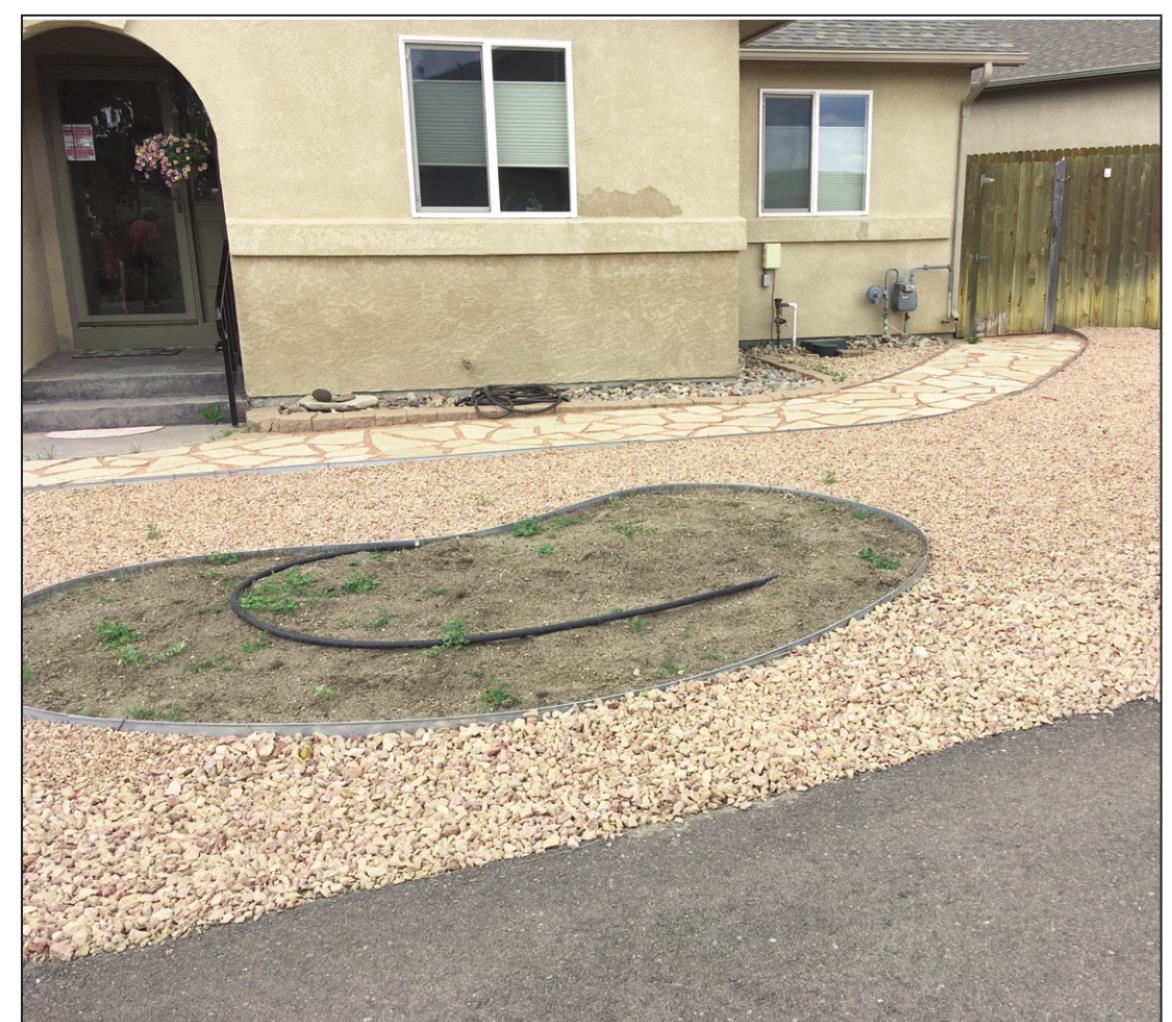
When Ada Clark became concerned about possible water shortages in the Colorado City area, she decided she wanted to lead by example and try xeriscaping. “I want to encourage others to do this so we don’t use our water foolishly,” Clark shared.
Pulled from the phrase “zero-scaping”, xeriscaping is actually a process that effectively saves you from watering your lawn. This is done by a few methods, usually one of which is removing all or most of the lawn and choosing a variety of native plants. Choosing xeric plants is one way of having a beautiful garden even while watering less. Replacing thirsty lawns can cut water, as well as the maintenance required to take care of a traditional yard.
A friend of Clark’s had just had their yard redone by Above and Beyond Landscaping from Pueblo, changing it over to the xeriscaping style. Clark contacted Above and Beyond and began doing research on the benefits of xeriscaping. After careful thought and planning, Clark decided to remove her lawn and redo her yard with wide rock paths and decorative gravel. This type of landscape needs little maintenance and the reduced water consumption also incurs lower costs.
Clark shared, “It has been quite a project. It has taken a lot of time. They took out all the lawn, put in a drip system, and created these rock pathways.” Clark did leave a decorative
Clark did leave a decorative area in the heart of her yard, where she can have plants. She chose low-maintenance succulents, plants that can survive in a typically dry region without access to water. Ultimately, the specific
Ultimately, the specific plants used when xeriscaping depend on the water conservation level achieved. It has been estimated that as much as 50-70% of treated house water goes to watering gardens and lawns. It has also been estimated that xeriscaping can cut that down to 10%. even though xeric plants will need some water. Professional landscapers consider a drip irrigation system a must for nearly all xeriscapes.
Clark, at 98 years young, is a long-time Greenhorn Valley resident, having lived in several different places in both Rye and Colorado City. She has also lived in New Mexico and Arizona which helps her appreciate the benefits of arid landscaping.